

The section of Tamiami Trail just south of Phillipi Creek, is not, by anyone’s estimate, the most scenic part of the highway. That would likely belong to the stretch of US 41 that cuts through the Florida Everglades, providing unseen access to the wildest part of the state. It is, however, a demarcation point—the last glimpses of downtown Sarasota begin to fade, replaced by a shifting horizon of businesses new and old, all holding memories for those who pass by. It is also, for the sake of this story, a sort of country road. A connection to a forgotten frontier.
A churrascaria is a Brazilian-style steakhouse, one that specializes in the churrasco cooking method. It is a style of cooking that dates back centuries, originating from the gaucho (or cowboy) cattle-herding tradition of Southern Brazil. These nomadic cattle-herders would cook long cuts of meat, coated in coarse salt, on long metal skewers over open flames. Smoky crusts, tender bites and communal meals were a way of life on the South American frontier. Hundreds of years later, that tradition lives on at restaurants such as Samba Brazilian Steakhouse, a churrascaria just south of downtown Sarasota.
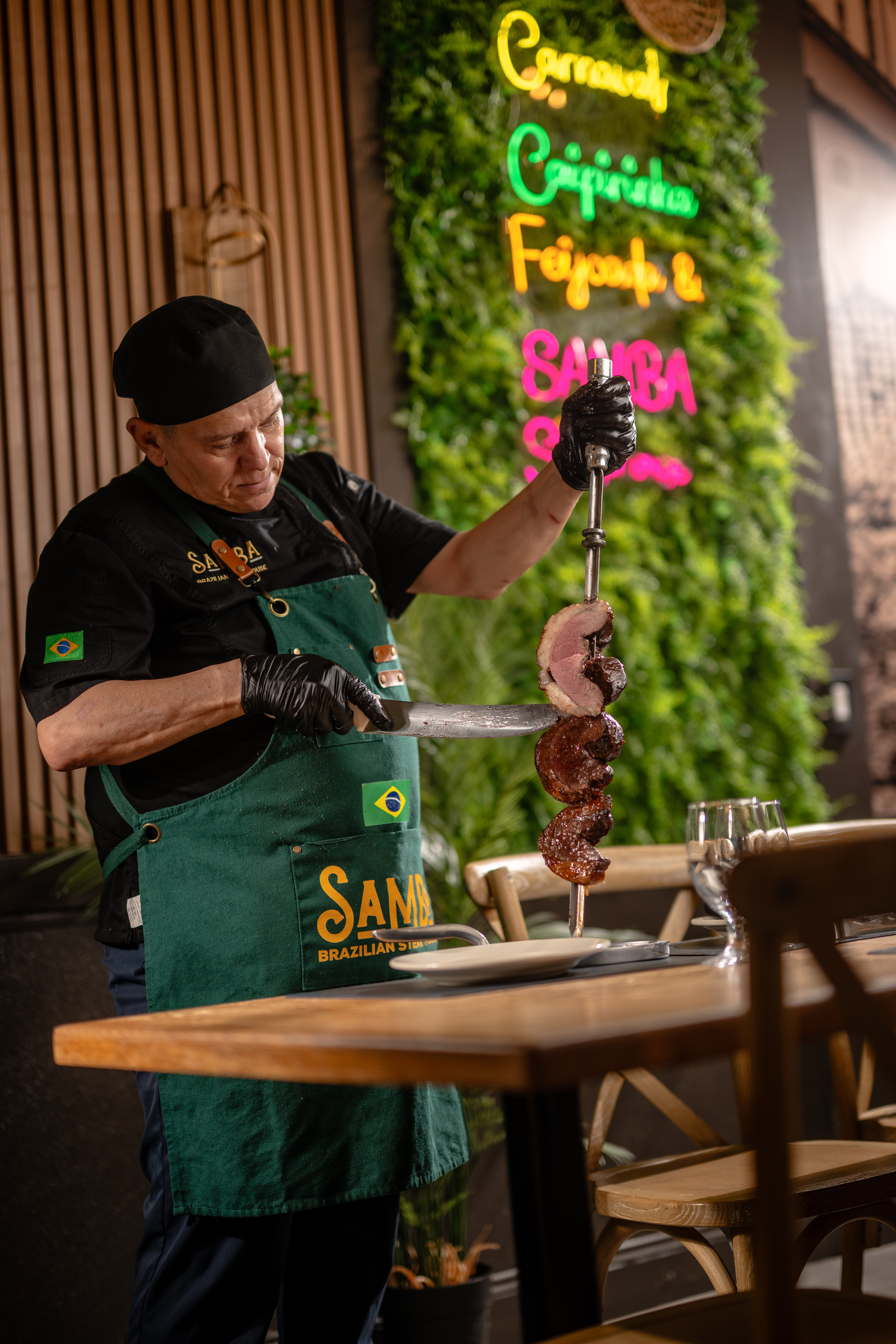
Samba, which opened in December 2024, is the creation of husband and wife team Wem Samba and Ellen Araujo. Although Samba Steakhouse, a sleek black building just off the Trail, does not scream “Western” in its aesthetic, the food speaks for itself. In May, the restaurant switched from a la carte to the rodizio style service format. Rodizio, which translates to “rotation” in Portuguese, means that at a Brazilian steakhouse such as Samba, cuts of fire-roasted meats are continuously brought out to the diner and sliced table-side by the waiter. In other words, a meal at Samba is a really, really good time.
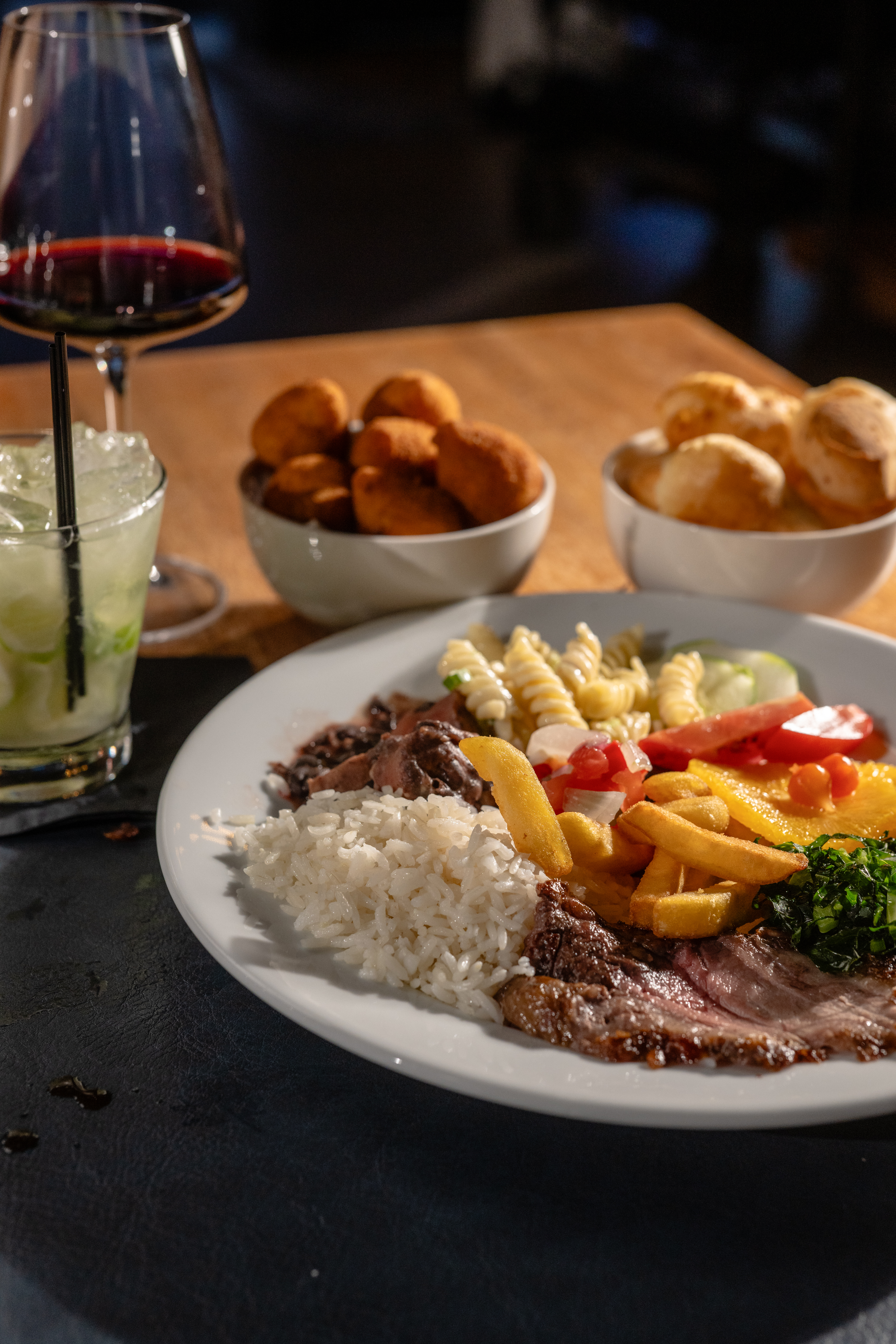
“When you mention a Brazilian steakhouse or a Brazilian way of eating meat, people are used to the meat being brought to the table. That’s why we switched to rodizio from a la carte,” says Samba. “The way we start the meal is that there is an unlimited salad bar buffet, where you serve yourself as much as you’d like and then we start with the meats, beginning with the regular cuts then moving to the more premium cuts.”
The salad bar, as every meal starts at Samba, is a bit of a misnomer. Yes, there are salads and assortment of ruffage—but there are also heaps of side dishes to help populate the plate. Everything at Samba is made in-house from the chicken, potato and macaroni salads, to the cold pasta and hot pasta dishes alike, french fries, gourmet cheese and shrimp offerings on the weekends. The pao de queijo is a Brazilian cheese bread, light and airy with the softest crunch on the outside. Beef empanadas are flakey, buttery delights, especially when paired with the bright, punchy molho verde sauce. Feijoada—the national dish of Brazil—is a savory, rich stew of black beans cooked down with pork chops, sausage, ribs and bacon.
Make no mistake about it, however, at Samba, the meat is the star of the show. The restaurant features an array of succulent offerings that originate from hog to heifer to hen. Behind the doors of the kitchen is a massive Brazilian rotisserie style grill, authentic to that of a traditional churrascaria. Decadent creations from chicken wings to house made pork sausage to glazed pork belly, juicy cuts of top sirloin, filet mignon, picanha and beyond rotate on motorized spits for hours at a time. Every cut of meat, every rotation of the spit, harkens back to that tradition of churrasco cooking.
The pork sausage, grinded and cased in-house, is juicy, luscious with a perfect snap. The chicken, which is one of the few cuts that requires hours of marination, is a tender affair, smothered in garlic and herbs. The crispy pork belly is one of the most arduous meats to prepare, but the bite is well worth the work. The pork belly is first wrapped in aluminum foil before cooking on the rotisserie for three hours, developing a succulent inside. The creation is then unwrapped and finished on the grill, creating a crunchy exterior with an incredibly soft meat.
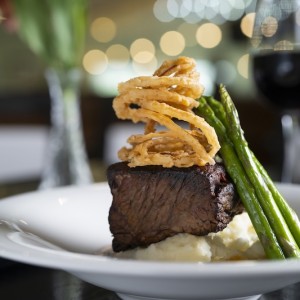
As Samba Steakhouse moves up toward the more premium cuts of beef, the meal only gets better. Top sirloin is sliced thin, with a flame-kissed crust that exudes a hint of salt and a beefy, rich, medium-rare interior. The bacon-wrapped filet mignon manages the best of both worlds—crispy, fatty bacon wraps around the prized medallions—encasing still-tender bites of filet mignon.
The most popular cut at Samba—and Wem Samba’s personal favorite—is the picanha or sirloin cap. This prized cut, bent into a horseshoe over a skewer, roasted with a layer of coarse salt, exudes what this churrascaria is all about. Picanha is sought after particularly for its fat cap, a wedge of marbled gold, ringing the delicate steak. The resulting bite is a symphony of flavor, the fat cap dissolving in your mouth before your teeth tear into the tender meat. Experiences such as these are what Samba Brazilian Steakhouse is designed to do—to be a transportive sanctuary, taking the dinner through time, from the blacktop of Tamiami Trail to the wild frontier of southern Brazil. SRQ